
Elbow pain can stop you in your tracks, whether you’re lifting weights, working at your computer, or swinging a golf club. But is it a golfer’s elbow or tennis elbow?
Despite the sporty names, these common overuse injuries affect far more than athletes. And here’s the good news: most people can recover without surgery, especially when they get the right treatment early.
At Maverick Chiropractic, we help people recover from tennis elbow and golfer’s elbow naturally, using expert chiropractic care, movement rehab, and soft tissue therapy to restore strength and prevent recurrence.
This guide explains everything you need to know, plus why chiropractic care can be a game-changer in your recovery.
What’s the Difference Between Tennis Elbow and Golfer’s Elbow?
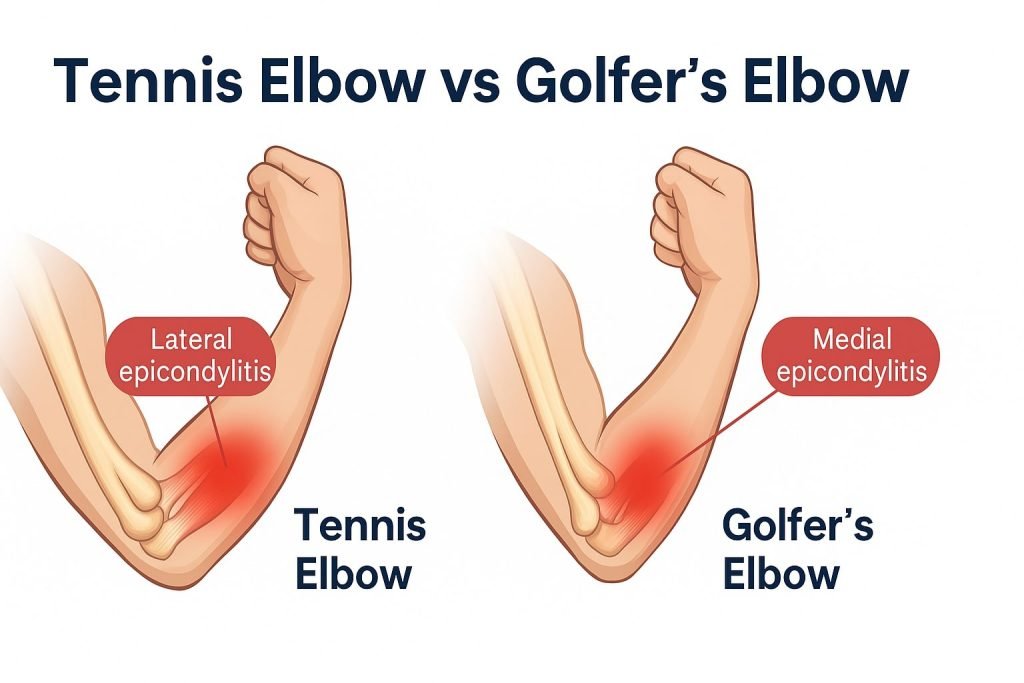
The key difference is where you feel the pain.
Tennis elbow (lateral epicondylitis) → pain on the outer (lateral) side of the elbow.
Golfer’s elbow (medial epicondylitis) → pain on the inner (medial) side of the elbow.
Both involve small tears in the tendons that attach the forearm muscles to the elbow, which is usually caused by overuse or repetitive motion.
Symptoms: How to Tell Which One You Have
Tennis elbow symptoms:
- Burning or aching outer elbow pain
- Weakened grip strength
- Pain when shaking hands, lifting objects, typing, or using tools
- Tenderness over the outer bony bump
Golfer’s elbow symptoms:
- Soreness on the inner elbow
- Pain with making a fist or bending the wrist
- Numbness or tingling down the forearm (sometimes to the ring/pinky fingers)
- Stiffness or discomfort with throwing or gripping motions
If you’re unsure, it’s wise to get evaluated by a healthcare provider to ensure the right diagnosis and avoid months of ineffective treatments.
Causes: You Don’t Have to Play Sports
Even if you’ve never played tennis or golf, you can still develop these injuries.
Common causes of tennis elbow:
- Racket sports (tennis, squash, pickleball)
- Keyboarding or mouse use
- Painting, plumbing, carpentry
- Weightlifting, especially improper wrist positions
Common causes of golfer’s elbow:
- Golf, baseball, softball, javelin throwing
- Rock climbing, gymnastics
- Weightlifting (curls, wrist rolls, pull-ups)
- Manual work requiring gripping or twisting
Both conditions fall under elbow tendonitis, caused by repetitive stress and strain on the tendons.
Other Conditions That Mimic Elbow Tendonitis
Not all elbow or forearm pain is tendonitis. Other potential causes include:
- Radial tunnel syndrome (nerve compression causing outer forearm pain)
- Cubital tunnel syndrome (nerve entrapment at the inner elbow)
- Osteoarthritis or rheumatoid arthritis
- Referred pain from the neck or shoulder
A thorough assessment is key to making sure you’re treating the right condition.
Best Treatments for Tennis Elbow and Golfer’s Elbow
The majority of cases improve with non-surgical care, including:
- Rest and modification of painful activities
- Ice for acute inflammation, heat for chronic stiffness
- Elbow brace for tendonitis (counterforce braces to offload tendon stress)
- Chiropractic care to restore joint alignment, improve mobility, and address underlying biomechanical imbalances
- Gentle stretching and strengthening exercises
- Manual therapy, massage, or myofascial release
- Correcting poor movement patterns or ergonomics
In rare, severe cases that don’t improve, some people may explore platelet-rich plasma (PRP) therapy, cortisone injections, or surgery, but these are typically last-resort options.
How Chiropractic Care Helps Elbow Pain
At Maverick Chiropractic, we take a whole-body approach to treating tennis elbow and golfer’s elbow. We don’t just focus on the elbow, we assess:
- Wrist and elbow joint alignment
- Shoulder and neck posture
- Forearm, shoulder, and scapular muscle balance
- Sports technique or workplace ergonomics
This matters because elbow tendonitis often develops as a downstream effect of bigger movement issues. Our Chiropractors in Naperville can help you:
- Reduce tendon irritation and muscle tension
- Restore joint mobility and alignment
- Improve strength, flexibility, and endurance
- Shorten recovery time and prevent recurrence
Many patients tell us that after weeks or months of lingering elbow pain, they finally turned the corner once they received targeted, chiropractic-guided care.
When to Seek Professional Help
- It’s time to see a provider if you have:
- Pain lasting longer than 4-6 weeks despite rest
- Numbness, tingling, or weakness
- Night pain or pain at rest
- Swelling, redness, or warmth at the elbow
How to Prevent Elbow Injuries
- Warm up properly before sports or repetitive tasks
- Strengthen forearm, wrist, shoulder, and core muscles
- Use ergonomically designed tools or sports equipment
- Pay attention to early warning signs — don’t ignore mild discomfort
- Learn proper movement technique, whether at work, in the gym, or on the field
Final Takeaway: Get Back to What You Love
Whether you’re struggling with tennis elbow, golfer’s elbow, or general elbow tendonitis, you don’t have to live with constant pain. The team at Maverick Chiropractic Clinic in Naperville helps people heal naturally and return to the activities they love with stronger, healthier movement.
Ready to start your recovery? Call us to schedule your appointment today with Maverick Chiropractic and let’s get you back on track — pain-free, confident, and stronger than ever.