
Scoliosis is not always obvious at first.
For some teens, it may show up as one shoulder sitting higher than the other. For adults, it may start as uneven posture, back stiffness, or pain that keeps returning. In many cases, the early signs are subtle enough that people blame them on poor posture, growth spurts, aging, workouts, or sitting too much.
Scoliosis is a sideways curve of the spine. It is often noticed during the preteen or teen years, especially during growth spurts, but adults can experience scoliosis symptoms as well. Adult scoliosis may come from a curve that started earlier in life, or it may develop over time due to age-related changes in the spine.
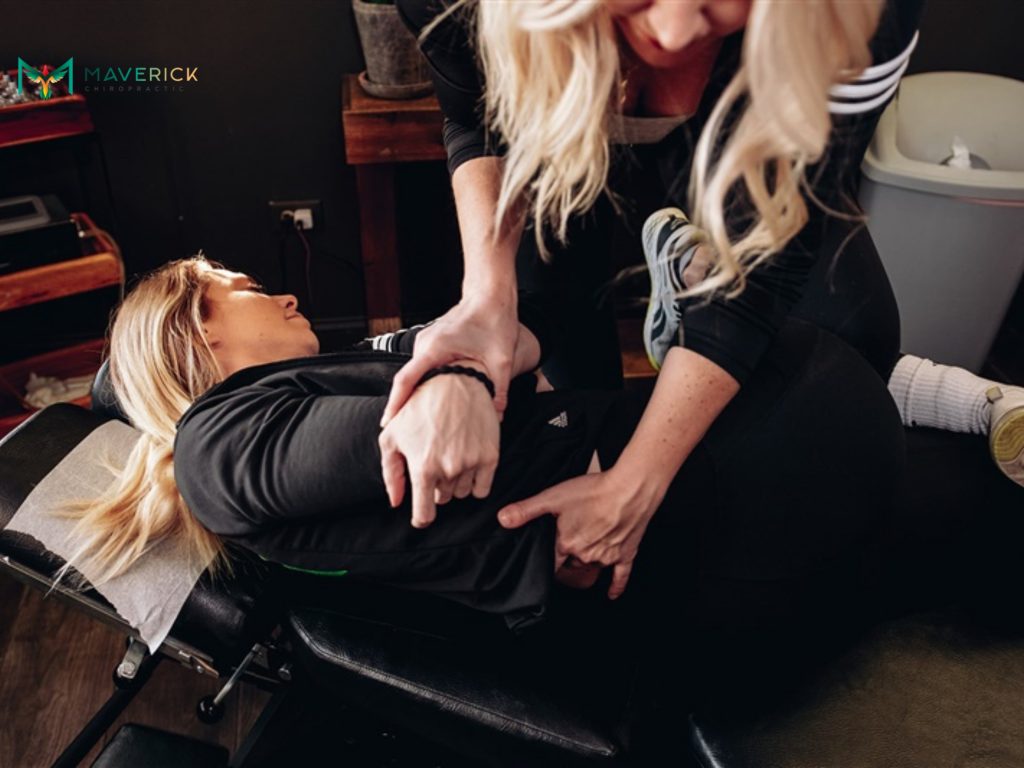
At Maverick Chiropractic, we offer personalized scoliosis treatment in Naperville focused on evaluating posture, spinal movement, muscle imbalance, and discomfort so we can help patients better understand their symptoms and next steps.
The earlier scoliosis signs are noticed, the easier it is to understand what is happening and what type of care may be appropriate.
What Are the Early Signs of Scoliosis?
The early signs of scoliosis often involve posture changes, uneven body alignment, back discomfort, or changes in how the body moves.
Common early signs include:
- One shoulder sitting higher than the other
- One shoulder blade sticking out more
- Uneven hips
- A visible curve in the spine
- Clothes fitting unevenly
- One side of the rib cage appearing more prominent
- Leaning slightly to one side
- Back pain or stiffness
- Muscle tightness on one side of the back
- Fatigue after standing or sitting
- Trouble keeping good posture
- A visible difference in how the waist looks from side to side
Some people notice these changes in the mirror. Others notice them in photos, while getting dressed, or during sports and daily movement.
Early Signs of Scoliosis in Teens
Scoliosis is often noticed during the preteen or teen years because the spine is still growing. A curve may become more visible during growth spurts.
Teen scoliosis does not always cause pain, which is why posture changes are important to watch.
Uneven Shoulders
One of the most common signs of scoliosis in teens is one shoulder sitting higher than the other. Parents may notice it in photos, when a teen is standing straight, or when they are wearing fitted clothing.
This can be subtle at first. It may look like the teen is slouching or standing unevenly, but if the same shoulder consistently sits higher, it may be worth getting checked.
One Shoulder Blade Sticks Out More
A teen with scoliosis may have one shoulder blade that appears more raised or prominent. This can become more noticeable when they bend forward.
Sometimes one side of the upper back may look more rounded or lifted than the other. This can happen because the spine’s curve can also create some rotation through the ribs and upper back.
Uneven Hips or Waist
The hips may look uneven, or one side of the waist may appear more curved than the other. Pants, skirts, or shorts may seem to sit unevenly even when they fit properly.
A parent may notice that one hip looks higher, or that one side of the waist has a deeper crease. These small visual changes can be early clues.
Rib Hump When Bending Forward
A rib hump may appear when the teen bends forward at the waist. One side of the ribs or upper back may sit higher than the other.
This does not automatically confirm scoliosis, but it is one of the signs that should be evaluated by a professional.
Leaning to One Side
Some teens may appear to lean slightly to one side when standing or walking. This may be subtle at first.
They may not notice it themselves, especially if there is no pain. Parents, coaches, or teachers may be the first to spot the change.
Back Fatigue or Discomfort
Although many teens with scoliosis do not have major pain, some may complain of back fatigue, stiffness, or discomfort after sitting, standing, sports, or school activities.
This can sometimes be brushed off as soreness from activity or carrying a backpack, but repeated discomfort should not be ignored.
Early Signs of Scoliosis in Adults
Adult scoliosis can look different from teen scoliosis.
In teens, scoliosis is often noticed because of posture changes. In adults, pain, stiffness, and changes in function are often what lead someone to seek help.
Adults may have scoliosis that started earlier in life, or they may develop spinal curvature due to age-related changes, disc degeneration, arthritis, injury, or other structural changes in the spine.
Recurring Low Back Pain
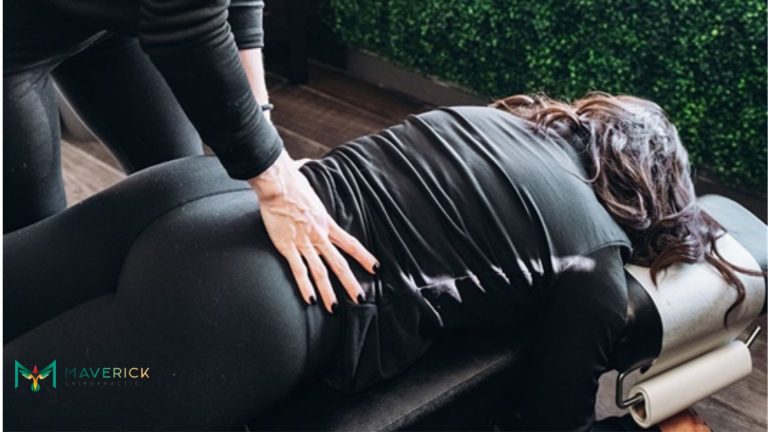
Back pain is one of the most common reasons adults discover scoliosis. The pain may be one-sided, recurring, or worse after standing, walking, sitting, or lifting.
Some adults describe it as a deep ache. Others feel tightness or pulling on one side of the back.
Uneven Posture
Adults may notice that one shoulder, hip, or side of the waist looks different. They may also feel like they are leaning to one side.
This can become more noticeable when standing for long periods, walking, or looking at photos.
Muscle Tightness on One Side
Scoliosis can create uneven muscle strain. One side of the back may feel tighter, more fatigued, or more overworked.
This tightness may return even after stretching or massage because the underlying spinal mechanics are still creating uneven stress.
Stiffness After Sitting or Standing
Adults with scoliosis may feel stiff after long periods at a desk, driving, or standing. This can be especially noticeable for Naperville professionals, parents, athletes, and active adults who spend long hours sitting and then try to stay active.
The stiffness may ease temporarily with movement but return later in the day.
Changes in Walking or Balance
In some adults, scoliosis can affect balance, gait, or how the body loads one side. This may feel like uneven pressure through the hips, legs, or feet.
Some people feel like one side of the body is working harder than the other during walking, workouts, or daily tasks.
Nerve-Related Symptoms
If spinal changes irritate nearby nerves, some adults may experience leg pain, numbness, tingling, or weakness.
These symptoms should be evaluated because they may also be related to disc issues, spinal narrowing, nerve irritation, or other spine conditions.
What Causes Scoliosis?
The cause depends on the type of scoliosis.
In many teens, scoliosis is idiopathic, which means the exact cause is unknown. It is not usually caused by carrying a heavy backpack, bad posture, or sleeping in the wrong position.
In adults, scoliosis may come from:
- A curve that started during adolescence
- Age-related spinal degeneration
- Arthritis
- Disc degeneration
- Osteoporosis
- Previous injury
- Muscle imbalance
- Structural changes in the spine
This is why adults and teens should not be treated as if they have the exact same problem. A teen with a growing spine and an adult with degenerative spinal changes may need very different care plans.
When Should You Get Scoliosis Evaluated?
Consider getting evaluated if you or your teen notices:
- Uneven shoulders or hips
- A visible spinal curve
- One shoulder blade sticking out
- Recurring back pain
- Back stiffness that keeps returning
- Rib prominence when bending forward
- Pain that affects school, work, sports, or sleep
- Numbness, tingling, or weakness
- Postural changes that seem to be getting worse
For teens, early evaluation matters because spinal curves can progress during growth. For adults, evaluation can help determine whether symptoms are related to scoliosis, disc changes, arthritis, posture, or another spine issue.
Can Chiropractic Care Help With Scoliosis Symptoms?
Chiropractic care does not cure scoliosis or magically straighten the spine. A trustworthy approach should not make that promise.
A chiropractor in Naperville may help with is improving spinal mobility, reducing muscle tension, supporting posture, improving movement patterns, and helping manage discomfort related to scoliosis.
For scoliosis-related symptoms, a chiropractor may evaluate:
- Spinal motion
- Posture
- Shoulder and hip alignment
- Muscle imbalance
- Core stability
- Gait and movement patterns
- Pain triggers
- Daily habits
Whether imaging or referral may be appropriate
For Naperville patients, Maverick Chiropractic can help assess whether symptoms may be related to scoliosis, posture, spinal mobility, or another cause of back pain. The goal is to understand what is happening and build a conservative care plan that supports comfort, movement, and daily function.
Final Takeaway
The early signs of scoliosis can be easy to miss. In teens, the biggest clues are often uneven shoulders, uneven hips, or one shoulder blade sticking out. In adults, scoliosis may show up as recurring back pain, stiffness, postural changes, or uneven muscle tension.
If you are in Naperville and noticing signs of scoliosis in yourself or your teen, Maverick Chiropractic can help evaluate posture, spinal movement, symptoms, and next steps. Call us at 331-302-9039 to book an appointment today!