
Spondylolisthesis occurs when one vertebra slips forward relative to the vertebra below it. It most commonly affects the lower back and can contribute to back pain, stiffness, muscle tightness, difficulty standing or walking, and, in some cases, pain, numbness, or tingling that travels into the legs.
Some people have spondylolisthesis without noticeable symptoms. For others, discomfort can interfere with exercise, work, sports, or everyday activities. Symptoms may become more noticeable with prolonged standing, repetitive bending, lifting, or movements that place additional stress on the lower back.
At Maverick Chiropractic, we provide personalized spondylolisthesis treatment in Naperville focused on helping reduce pain, improve mobility, strengthen the muscles that support the spine, and address movement patterns that may be contributing to your symptoms.
Our approach to conservative care may include chiropractic treatment, soft tissue therapy, corrective exercises, rehabilitation, and recommendations for modifying activities that aggravate your back.
If you have been diagnosed with spondylolisthesis or are experiencing persistent lower back or radiating leg pain, call 331-302-9039 to schedule an evaluation at Maverick Chiropractic.
Book A Spondylolisthesis Relief Appointment
Chiropractor For Spondylolisthesis Treatment in Naperville
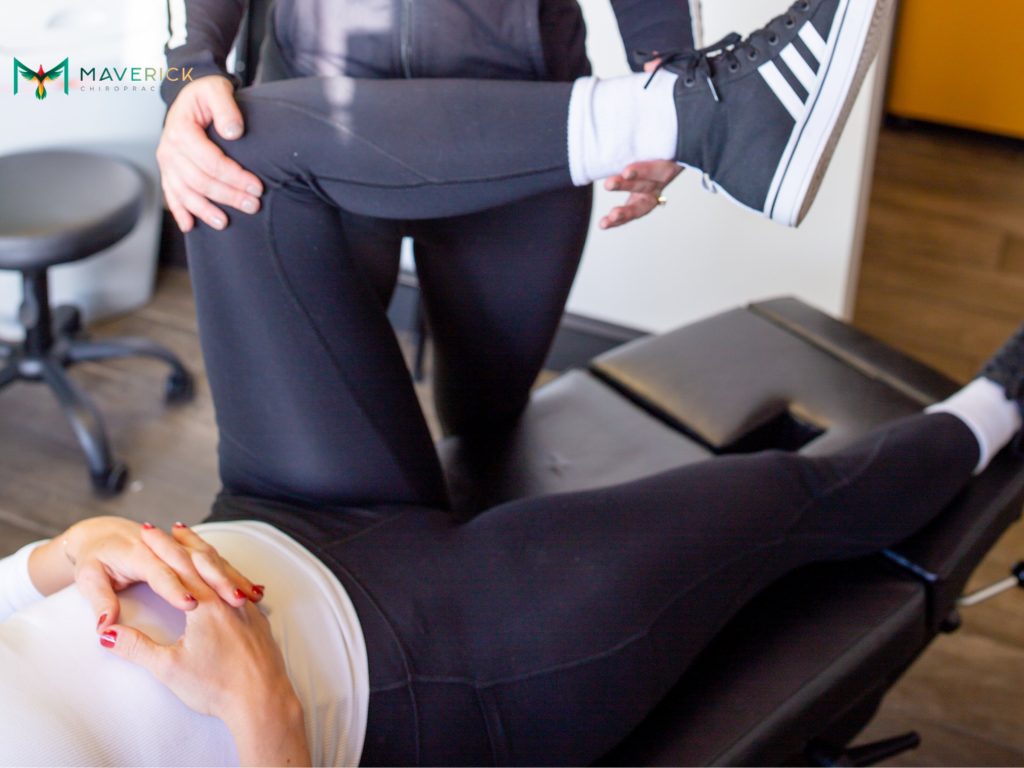
If you are searching for a chiropractor for spondylolisthesis in Naperville, the right treatment starts with understanding your condition, symptoms, and how your spine is functioning.
Spondylolisthesis can affect people differently. A mild vertebral slip may produce few symptoms, while another person may experience recurring lower back pain, stiffness, muscle tightness, or irritation of nearby nerves.
At Maverick Chiropractic, we take a conservative approach designed to improve function without placing unnecessary stress on the affected area.
Our approach may include:
- Targeted chiropractic care to address restricted movement in appropriate areas of the spine and surrounding joints
- Soft tissue therapy to reduce muscle tightness and improve movement
- Corrective exercises to strengthen the core, hips, and muscles supporting the spine
- Rehabilitation to improve stability, mobility, and confidence with daily movement
- Movement retraining to address habits that may continue placing excessive stress on the lower back
- Activity recommendations to help you remain active while avoiding movements that aggravate your symptoms
Our goal with spondylolisthesis chiropractic treatment in Naperville is not to force a slipped vertebra back into position. Instead, we focus on helping manage symptoms, improve mobility and strength, and support better function around the affected area.
For many people with low-grade spondylolisthesis, conservative treatment is an important first step before more invasive options are considered.
About Spondylolisthesis
What is Spondylolisthesis?
Spondylolisthesis is a spinal condition in which one vertebra moves forward in relation to the vertebra beneath it.
Although it can occur in different areas of the spine, it is most common in the lumbar spine, or lower back. Depending on how much the vertebra has shifted and whether nearby nerves are affected, spondylolisthesis may cause no symptoms at all or may lead to back pain, stiffness, leg symptoms, and difficulty with certain activities.
Spondylolisthesis is often classified according to the amount of vertebral slippage. Lower-grade cases are more common and are frequently treated first with conservative care, while more significant slippage may require closer medical monitoring or surgical evaluation.
Spondylolisthesis Causes
There is not one single cause of spondylolisthesis. The condition can develop for several reasons depending on the type.
Common causes and contributing factors include:
- Age-related changes: Wear and degeneration of the spinal discs and joints can reduce stability between vertebrae over time.
- Repetitive stress: Activities involving repeated extension, rotation, jumping, or loading of the lower back may place additional stress on the vertebrae.
- Spondylolysis: A stress fracture or defect in part of a vertebra can sometimes allow one vertebra to move forward.
- Sports injuries: Gymnastics, football, weightlifting, and other activities that repeatedly load or extend the spine may increase risk in some athletes.
- Traumatic injuries: Falls, collisions, or other significant injuries can damage structures supporting the spine.
- Spinal development: Some people are born with differences in vertebral structure that increase their risk of developing spondylolisthesis.
- Degenerative spinal conditions: Changes affecting discs, facet joints, and surrounding structures may contribute to vertebral instability.
Understanding why the condition developed and which movements are aggravating it can help guide an appropriate treatment and rehabilitation plan.
Symptoms of Spondylolisthesis
Some people with spondylolisthesis have no symptoms, particularly when the vertebral slip is mild. When symptoms do occur, they may include:
- Lower back pain
- Back stiffness
- Tight hamstrings
- Muscle tightness or spasms
- Pain in the buttocks
- Pain that travels into the thighs or legs
- Numbness or tingling in the feet or legs
- Leg weakness
- Difficulty standing for extended periods
- Difficulty walking for long periods
- Pain that increases with certain movements or activities
Symptoms can overlap with conditions such as sciatica, spinal stenosis, and other causes of radiating pain. That is why an accurate diagnosis and appropriate evaluation are important before beginning treatment.
Maverick Chiropractic Care For Spondylolisthesis Treatment
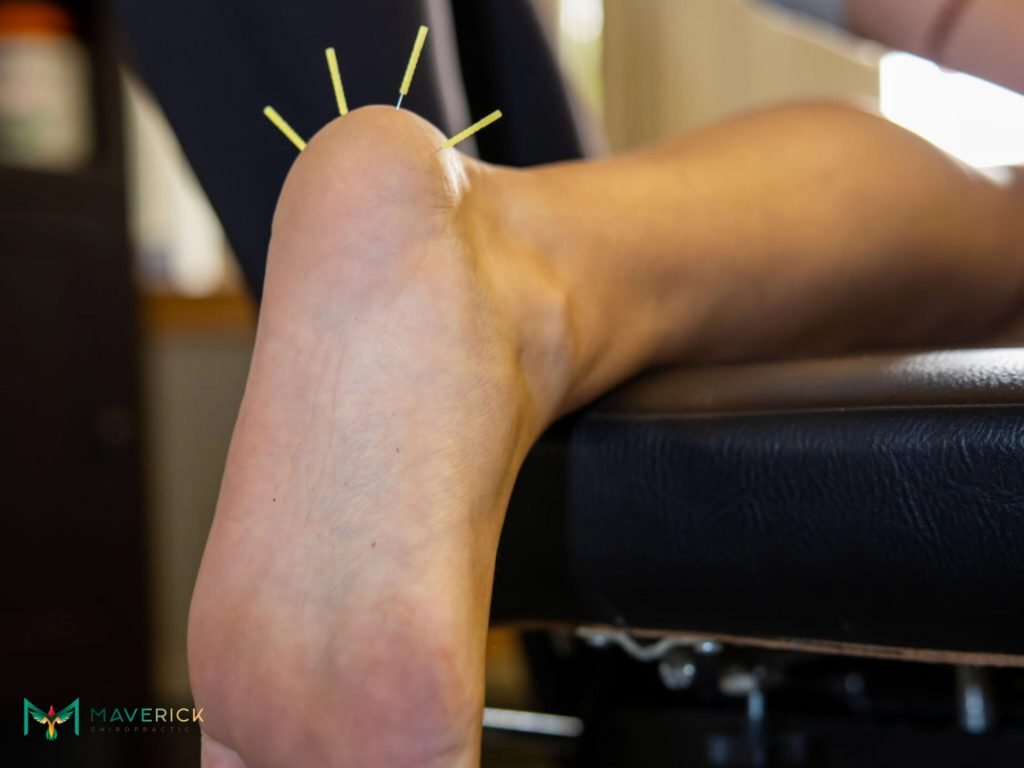
Every case of spondylolisthesis is different, so treatment should be based on more than just the diagnosis itself.
At Maverick Chiropractic, we begin with a detailed evaluation of your lower back mobility, hip and pelvic movement, core strength, posture, activity level, and the movements that increase your symptoms. We also consider the severity of the vertebral slip, whether nerve symptoms are present, and how the condition is affecting your daily life.
This helps us understand how spondylolisthesis is affecting your movement and function so we can build a conservative care plan around your specific needs.
Our focus is on helping you manage pain, improve mobility, strengthen the muscles that support your spine, and move with more confidence. Conservative care does not reverse the vertebral slip itself, but it can help many patients improve function and stay active.
Why Choose Us?
- Trusted provider of spondylolisthesis treatment in Naperville
- Personalized care based on your symptoms and movement
- Conservative, nonsurgical approach
- Focus on improving strength, mobility, and stability
- Care for active adults, athletes, and people with recurring back pain
- Treatment adapted to the severity of your condition
- Modern chiropractic clinic with supportive, attentive care
- Focus on long-term function, not temporary symptom masking
When you choose Maverick Chiropractic for spondylolisthesis treatment in Naperville, you are choosing a team focused on helping you move better and understand your condition.
We take time to evaluate your symptoms, explain what may be contributing to your pain, and build a plan that supports your daily activities, exercise goals, and long-term spinal health.
Frequently Asked Questions
What is spondylolisthesis?
Spondylolisthesis is a condition in which one vertebra slips forward in relation to the vertebra below it. It most commonly affects the lower back and may cause back pain, stiffness, leg pain, numbness, tingling, or difficulty standing and walking.
What causes spondylolisthesis?
Spondylolisthesis can result from age-related spinal degeneration, repetitive stress, a stress fracture known as spondylolysis, traumatic injury, sports participation, or structural differences in the spine.
What are the symptoms of spondylolisthesis?
Common spondylolisthesis symptoms include lower back pain, stiffness, tight hamstrings, muscle spasms, buttock pain, and difficulty standing or walking for extended periods. If nearby nerves are irritated, pain, numbness, tingling, or weakness may also travel into the legs.
Can a chiropractor help with spondylolisthesis?
A chiropractor may help some people with spondylolisthesis manage pain, stiffness, restricted movement, and muscular imbalances through conservative care. Treatment may include carefully selected chiropractic techniques, soft tissue therapy, strengthening exercises, mobility work, and rehabilitation. The appropriate approach depends on the grade of spondylolisthesis and your individual symptoms.
What is the difference between spondylolisthesis and spondylolysis?
Spondylolysis is a stress fracture or defect in an area of the vertebra called the pars interarticularis.
Spondylolisthesis occurs when one vertebra slips forward relative to another.
Spondylolysis can sometimes lead to spondylolisthesis if the stress fracture allows the affected vertebra to move forward.
What makes spondylolisthesis worse?
Activities that place repeated or excessive stress on the lower back may aggravate symptoms. Depending on the individual, this can include repeated back extension, heavy lifting with poor technique, high-impact activity, prolonged standing, or continuing exercises that reproduce pain.
The specific activities you should modify depend on your condition and symptoms.
What exercises should I avoid with spondylolisthesis?
There is no single list that applies to everyone. Activities involving repeated hyperextension of the lower back, heavy spinal loading, or movements that clearly increase pain may need to be modified temporarily.
Your exercise program should be based on the severity of your condition, symptoms, strength, mobility, and goals.
What exercises can help spondylolisthesis?
Exercise programs commonly focus on strengthening the core, hips, glutes, and muscles surrounding the spine while improving movement control. Specific exercises should be selected based on your evaluation because the right program will vary from patient to patient.
Can spondylolisthesis get worse over time?
It can, but progression varies considerably between individuals. Factors such as the type and grade of spondylolisthesis, age, spinal degeneration, symptoms, and activity can influence how the condition behaves. Periodic medical evaluation may be recommended when progression is a concern.
Schedule An Appointment For Spondylolisthesis Evaluation Today!
Lower back pain caused by spondylolisthesis can make standing, walking, exercising, working, and enjoying everyday activities more difficult. The right treatment starts with understanding your symptoms and determining whether conservative care is appropriate for you.
At Maverick Chiropractic, we provide personalized spondylolisthesis treatment in Naperville focused on improving mobility, strengthening the muscles that support your spine, managing pain, and helping you move more comfortably.
Whether you have recently been diagnosed with spondylolisthesis or have been dealing with ongoing lower back or radiating leg symptoms, our team can evaluate your movement and develop a treatment plan based on your needs.
Call us or book your appointment online to schedule an evaluation with a spondylolisthesis chiropractor in Naperville today.
What are the patients saying
I HIGHLY recommend getting all your chiropractic needs solved here! They also have the cutest dog, Bear who is always there making the atmosphere calm and homey!