

Sciatica can feel sharp, burning, electric, achy, or deep. For some people, it starts in the lower back and travels into the buttock. For others, the pain runs down the back of the leg and may reach the calf, foot, or toes.
So what causes sciatica?
Sciatica happens when the sciatic nerve or the nerve roots that form it become irritated, compressed, or inflamed. The sciatic nerve runs from the lower back through the hips, buttocks, and down each leg. When something puts pressure on the nerve or irritates it, pain can travel along that pathway.
At Maverick Chiropractic, we offer personalized sciatica treatment in Naperville focused on identifying what may be irritating the sciatic nerve, improving movement, and helping you find long-term relief.
The important thing to know is that sciatica is not usually the root problem itself. It is a symptom of something irritating the nerve.
Here are eight common reasons for sciatic nerve pain:
1. Herniated Disc
A herniated disc is one of the most common causes of sciatica.
Discs sit between the bones of the spine and act like cushions. When part of a disc bulges or leaks outward, it can press on or irritate nearby nerve roots. If those nerve roots form part of the sciatic nerve, pain can travel into the buttock, hip, leg, or foot.
A herniated disc may cause:
- Lower back pain
- Buttock pain
- Pain down one leg
- Numbness or tingling
- Pain that worsens with sitting
- Pain with bending or lifting
- Weakness in the leg or foot
This is especially common in people who lift, twist, sit for long periods, or have sudden back strain.
2. Spinal Stenosis
Spinal stenosis means the space inside the spine becomes narrowed. When that space gets smaller, it can put pressure on nerves.
Sciatica from spinal stenosis may feel different from disc-related sciatica. It may cause leg pain, heaviness, numbness, or weakness that gets worse with standing or walking and improves when sitting or leaning forward.
Symptoms may include:
- Leg pain while walking
- Numbness or tingling
- Weakness
- Back pain
- Symptoms that improve with sitting
- Pain that worsens with standing upright
This is more common in older adults, but it can affect anyone with narrowing or degenerative changes in the spine.
3. Bone Spurs
Bone spurs are bony overgrowths that can develop around joints or spinal bones. If they form near nerve openings in the spine, they can irritate or compress nerve roots.
Bone spurs are often related to arthritis or long-term spinal wear and tear. They may contribute to sciatica when they reduce space around a nerve.
Symptoms may include leg pain, numbness, tingling, stiffness, or discomfort that worsens with certain positions or movements.
4. Degenerative Disc Changes
As discs age, they can lose height, hydration, and flexibility. These changes may alter how the spine moves and how much space nerves have.
Degenerative disc changes do not always cause pain. Many people have disc changes without symptoms. But when those changes irritate or compress nerve roots, sciatica can develop.
This may cause:
- Recurring lower back pain
- Leg pain
- Stiffness
- Symptoms that flare with sitting or lifting
- Pain that comes and goes over time
Degenerative disc changes can also make the lower back more sensitive to daily activities like sitting, bending, driving, lifting, or standing for long periods.
5. Piriformis Muscle Irritation
The piriformis is a small muscle deep in the buttock. In some people, irritation or tightness in this area can contribute to sciatic-like pain.
This is often called piriformis syndrome, although not every case of buttock and leg pain comes from the piriformis.
Symptoms may include:
- Deep buttock pain
- Pain that worsens with sitting
- Pain traveling down the back of the leg
- Hip tightness
- Pain with stairs, squats, or prolonged driving
This is one reason a proper evaluation matters. Pain down the leg may come from the lower back, the hip, the piriformis area, or a combination of factors.
6. Poor Posture and Prolonged Sitting
Sitting for long periods can increase pressure on the lower back and hips. Poor posture can also affect how the spine, pelvis, and muscles load the sciatic nerve area.
This is especially relevant for people who work at a desk, drive frequently, or sit for long periods without movement breaks.
Prolonged sitting may aggravate sciatica by increasing pressure through the low back, tightening the hips, and irritating sensitive nerves.
If your sciatic pain feels worse after sitting, driving, or working at a computer, posture and movement habits may be part of the problem.
7. Injury, Lifting, or Sudden Strain
Sciatica can start after an injury, awkward lift, sports movement, fall, or sudden twisting motion.
This can irritate discs, joints, muscles, or nerves in the lower back and pelvis.
Common triggers include:
- Lifting with poor form
- Twisting while carrying something
- Yard work
- Heavy gym lifts
- Slipping or falling
- Sports injuries
- Repetitive bending
- Sudden increase in activity
If sciatic pain starts after a specific injury, it is worth getting evaluated, especially if symptoms are severe or travel below the knee.
8. Pregnancy or Body Mechanics Changes
Pregnancy can sometimes contribute to sciatic-like pain due to changes in posture, pelvic position, weight distribution, and muscle tension. Not all leg pain during pregnancy is true sciatica, but the symptoms can feel similar.
Body mechanics changes outside of pregnancy can also matter. Weight changes, altered walking patterns, weak core muscles, hip weakness, and poor mobility can all affect how the lower back and sciatic nerve area are loaded.
When the body starts moving differently, certain areas may take on more stress. Over time, that extra stress can irritate the low back, hips, glutes, or sciatic nerve pathway.
How Can a Chiropractor Help With Sciatica?
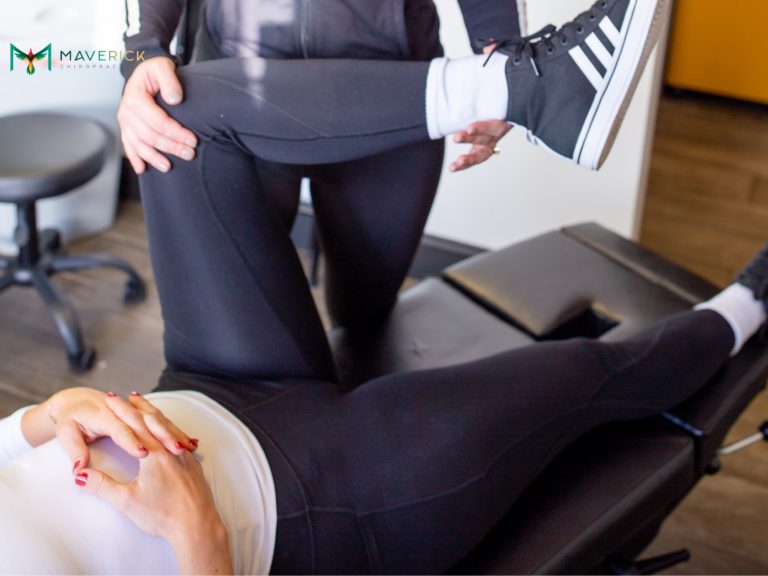
A Naperville chiropractor may help with sciatica when symptoms are related to spinal mobility, disc irritation, joint restriction, posture, muscle tension, or movement mechanics.
A chiropractic evaluation may include:
- Lower back range of motion
- Hip mobility
- Nerve tension testing
- Posture assessment
- Strength and reflex checks
- Gait and movement patterns
- Pain triggers
- Daily sitting and lifting habits
Care may include chiropractic adjustments when appropriate, soft tissue therapy, mobility work, corrective exercises, posture guidance, and activity modification.
For people searching for a chiropractor for sciatica treatment in Naperville, Maverick Chiropractic can help evaluate what may be irritating the sciatic nerve and recommend a conservative care plan based on the findings.
Can Sciatica Go Away on Its Own?
Some mild cases of sciatica improve with time, movement changes, and reduced irritation. However, sciatica that keeps returning should not be ignored.
If the underlying cause is still present, symptoms may come back again and again.
Recurring sciatica may mean the lower back, hips, posture, muscle tension, or movement habits are still placing stress on the sciatic nerve pathway. Getting evaluated can help identify what needs to change.
Final Takeaway
Sciatica is usually a sign that something is irritating or compressing the sciatic nerve or the nerve roots that form it. Common causes include herniated discs, spinal stenosis, bone spurs, degenerative disc changes, piriformis irritation, posture, prolonged sitting, injury, and body mechanics changes.
If you are in Naperville and dealing with pain that runs from your lower back or buttock down your leg, Maverick Chiropractic can help evaluate the likely cause and guide you toward conservative treatment options.