
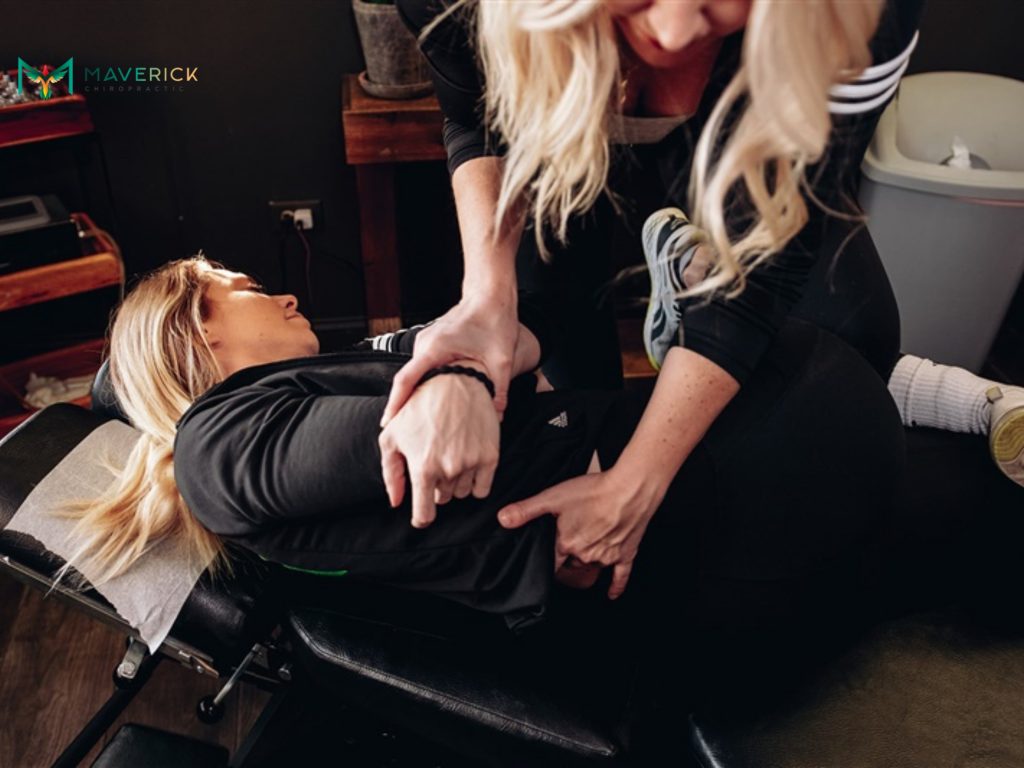
If you have been diagnosed with spondylolisthesis, you may be wondering whether chiropractic care can help.
The short answer is yes, chiropractic care may help some people manage the pain, stiffness, muscle tension, and movement problems associated with spondylolisthesis when conservative treatment is appropriate.
However, chiropractic treatment does not physically push a slipped vertebra back into place. Spondylolisthesis is a structural condition in which one vertebra has moved forward relative to the vertebra below it. Conservative care instead focuses on improving function around the affected area, reducing discomfort, strengthening the muscles that support the spine, and helping you move more comfortably.
For many people with low-grade spondylolisthesis, nonsurgical treatment is often the first approach.
What Is Spondylolisthesis?
Spondylolisthesis occurs when one vertebra slips forward relative to the vertebra beneath it.
It most commonly affects the lower back and can range from a mild slip with little or no discomfort to a more significant condition that affects daily movement.
Common symptoms may include:
- Lower back pain
- Back stiffness
- Tight hamstrings
- Muscle tightness or spasms
- Buttock pain
- Pain that travels into the leg
- Tingling or numbness
- Leg weakness
- Pain with prolonged standing or walking
Spondylolisthesis can develop for different reasons. In some people, a stress fracture known as spondylolysis contributes to the vertebral slip. In others, age-related changes in the spinal discs and joints lead to degenerative spondylolisthesis.
How Can a Chiropractor Help With Spondylolisthesis?
Chiropractic care should focus on managing symptoms and improving movement, not trying to force the slipped vertebra into another position.
Depending on your symptoms and evaluation, treatment may address several areas.
Improve Movement Around the Lower Back
When your lower back hurts, other parts of your body may begin compensating.
The hips, pelvis, and nearby spinal joints can become stiff or move differently as you naturally try to avoid painful positions.
Carefully selected chiropractic techniques may help improve movement in appropriate surrounding joints while avoiding unnecessary stress on the affected segment.
Reduce Muscle Tightness
Muscles around the lower back, hips, glutes, and legs may tighten in response to pain or changes in movement.
Soft tissue therapy and mobility work may help address:
- Lower back stiffness
- Tight hamstrings
- Hip tightness
- Muscle tension
- Reduced comfortable range of motion
Reducing these restrictions may make everyday movement and rehabilitation easier.
Strengthen the Muscles Supporting the Spine
Exercise is an important part of conservative spondylolisthesis care. Treatment often focuses on strengthening the muscles that help stabilize the trunk, pelvis, and hips, including:
- Core muscles
- Abdominal muscles
- Glutes
- Hip muscles
- Supporting spinal muscles
Improving strength and movement control can help support the spine during daily activity.
Improve Movement Patterns
How you lift, bend, stand, train, or exercise can influence how much stress is placed on your lower back.
A chiropractor may evaluate your movement and recommend changes such as:
- Better lifting technique
- Exercise modifications
- Core control exercises
- Hip mobility work
- Posture adjustments
- Gradual return to sports or training
The goal is not to stop moving. It is to help you move in ways that are better tolerated and less likely to aggravate your symptoms.
What Does Chiropractic Treatment for Spondylolisthesis Include?
There is no one-size-fits-all treatment plan. Depending on your condition, conservative care may include:
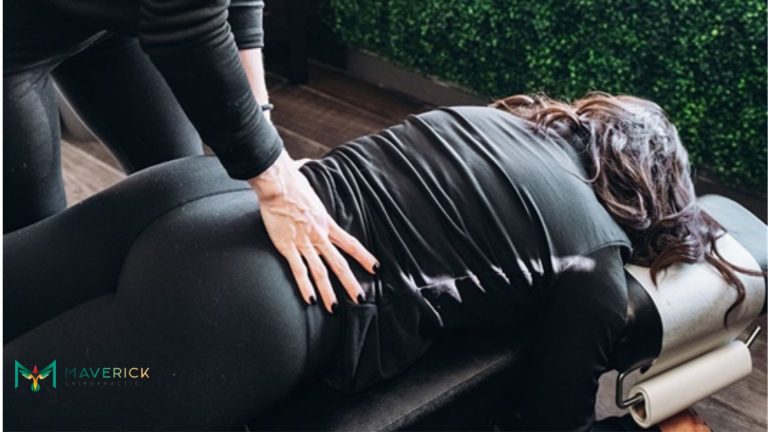
- Chiropractic Care: Carefully selected techniques may help address restricted movement in surrounding joints.
- Soft Tissue Therapy: Hands-on treatment may help reduce tightness in the lower back, hips, glutes, and surrounding muscles.
- Core Stabilization: Exercises may help improve trunk control and support the spine during daily movement.
- Hip and Glute Strengthening: Stronger hips and glutes can help improve lower-body movement and reduce unnecessary stress on the lower back.
- Mobility Work: Hamstring, hip, and other mobility exercises may be included depending on your specific limitations.
- Activity Modification: Activities that consistently increase symptoms may need to be reduced or modified temporarily.
- Movement Retraining: Learning how to lift, bend, exercise, and move with better control can be an important part of long-term management.
When Should You See a Chiropractor?
Consider having your condition evaluated if you are dealing with:
- Persistent lower back pain
- Recurrent stiffness
- Pain with standing or walking
- Difficulty exercising
- Reduced mobility
- Muscle tightness that keeps returning
- Pain that affects normal daily activities
A chiropractor can evaluate your movement and symptoms and determine whether conservative chiropractic and rehabilitative care may be appropriate.
Seek prompt medical attention if you develop significant or worsening leg weakness, loss of bowel or bladder control, numbness around the groin or saddle area, or rapidly worsening neurological symptoms.
Get Chiropractic Care for Spondylolisthesis in Naperville
Spondylolisthesis does not automatically mean surgery or giving up the activities you enjoy. For appropriate patients, conservative chiropractic care and rehabilitation may help reduce pain, improve mobility, strengthen the muscles that support the spine, and make everyday movement more comfortable.
At Maverick Chiropractic, we provide personalized spondylolisthesis treatment in Naperville based on your symptoms, movement, activity level, and goals. Our focus is on improving function, supporting spinal stability, and helping you stay active with a conservative treatment approach.
Call 331-302-9039 to schedule an evaluation at Maverick Chiropractic today.